The stock market has nothing on me for volatility.
Headlines scream when the market drops a few percentage points:
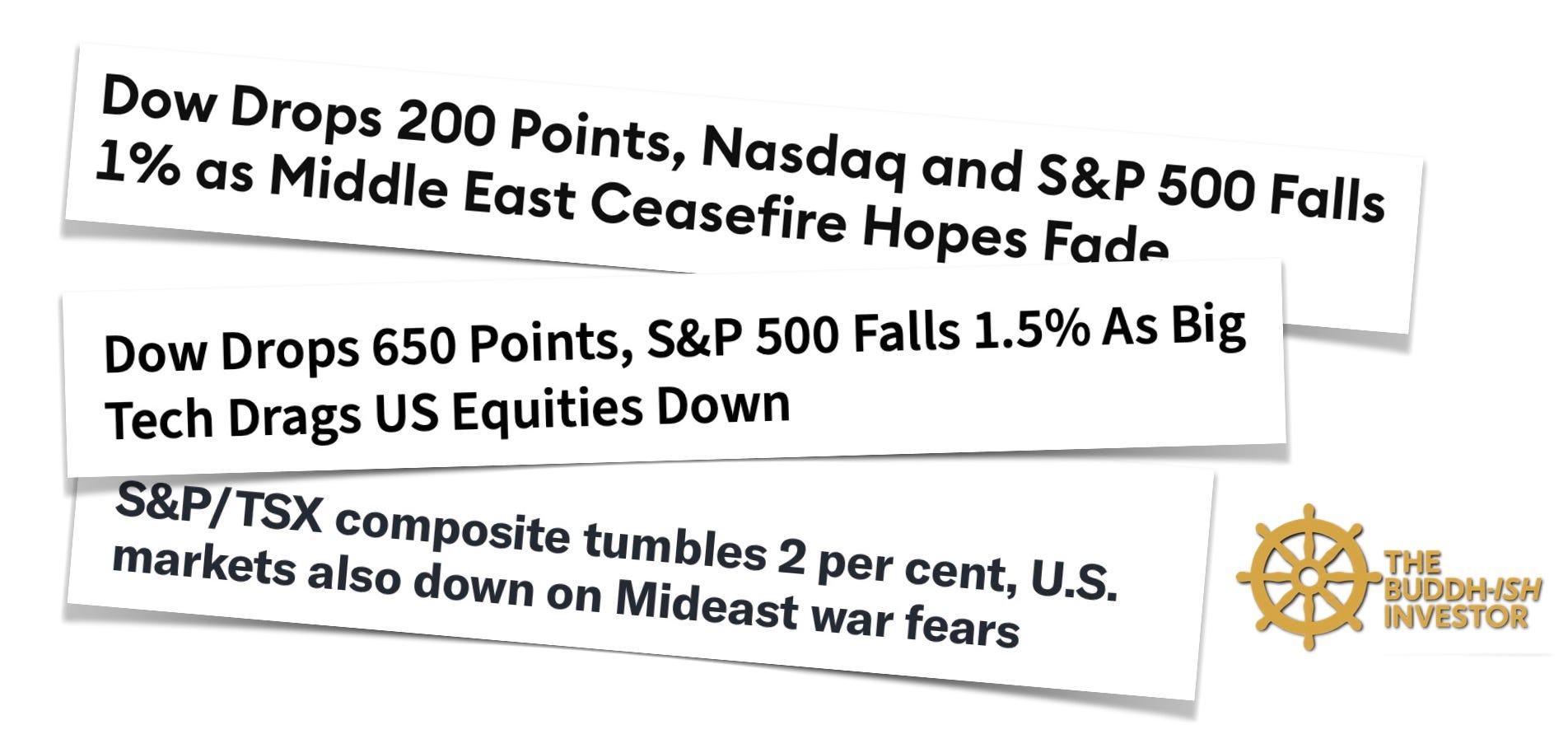
But a down 2% day in my life barely registers.
If I had to put numbers to it, I’d guess my emotions swing anywhere from +20% to –20% on a typical day. I’m elated that my son got himself dressed, and then deflated when I see my work schedule for the day. Pretty mundane stuff, but wide swings nonetheless.

That kind of volatility would send markets into chaos. There’d be panic, forced selling, maybe even financial ruin.
But in our lives, it’s just normal.
Frustratingly normal — especially after a decade of meditating and studying Buddhist teachings.
I Thought I’d Be Different by Now
When I first started down this path ten years ago, I imagined I’d be a different person by now: calmer, less reactive, more at peace. Instead, I still find myself riding an emotional rollercoaster, my mood swinging like the VIX, Wall Street’s fear gauge—up and down and up again:
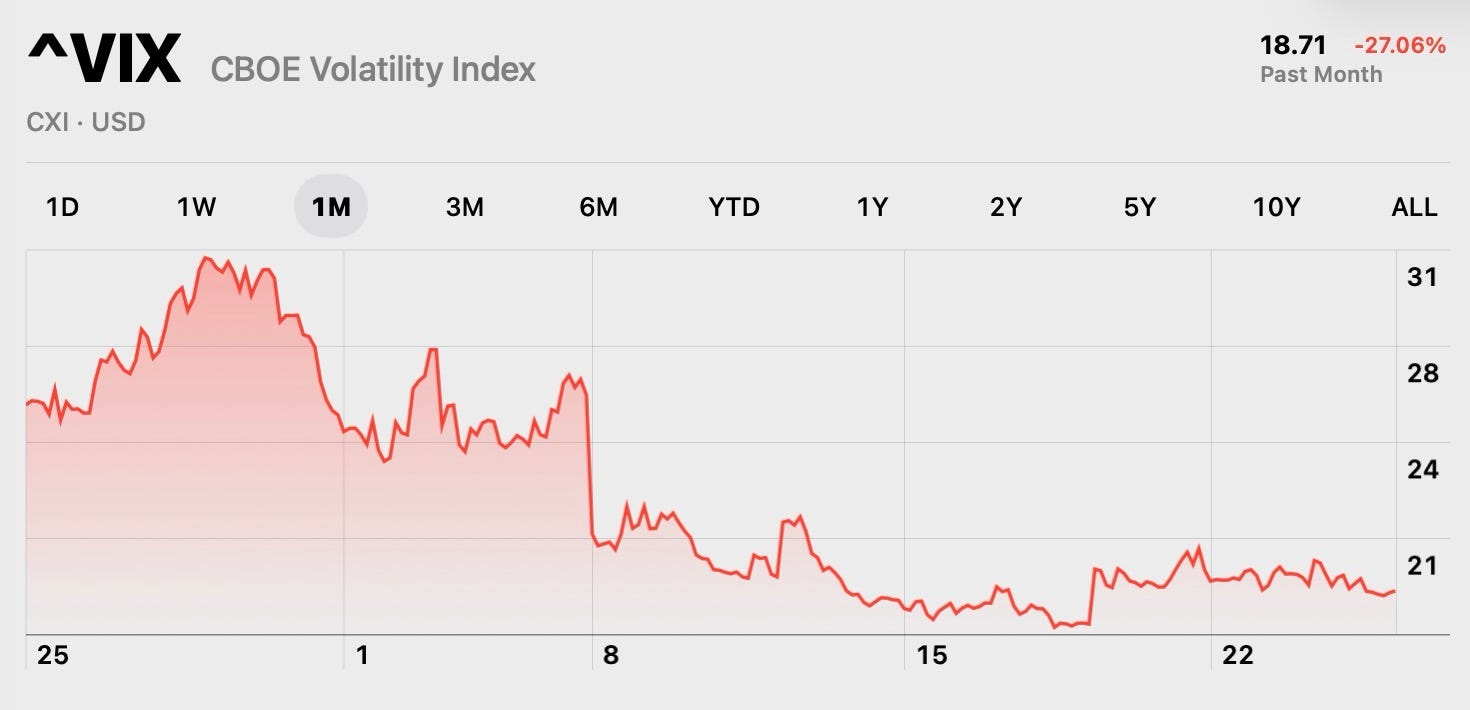
In darker moments, I wonder if I’m just not cut out for this. A failed meditator. A failed Buddhist. Ten years of sitting quietly, watching my breath, reading the dharma — and I still lose my bananas over small things.
Shouldn’t I be further along by now?
You Don’t Get Rid of the Swings
But maybe that expectation was off to begin with.
Even the Buddha got swept up in his emotions. In the Dvedhāvitakka Sutta (MN 19), he recalls how, before his awakening, thoughts of ill will would arise during meditation. He didn’t pretend they weren’t there. He noticed them, recognized where they might lead, and worked to let them go.
There’s something reassuring about that. Even the Buddha-to-be had an unruly mind.
Of course, awakening is another matter. But for the rest of us, perhaps the work isn’t about eliminating every emotional high and low. It’s about learning not to be completely hijacked by them.
Feeling the swings without being pushed around by them.
This is what equanimity is all about.
It’s simple enough to understand, but much harder to live. Life has a way of making sure of that.
1% Less Likely to Flip My Lid
But then, every so often, something small happens that makes me pause.
The other morning, my coffee pot overflowed. Coffee everywhere. And worst of all — none left to drink. Ten years ago, that would’ve ruined my morning. This time, I just laughed. More of a muted chuckle through clenched teeth, really, but still.
It sounds trivial, but maybe it still counts. Maybe a decade of practice hasn’t eliminated my emotional volatility so much as made me a little less a slave to it. Maybe I’m 1% less likely to flip my lid.
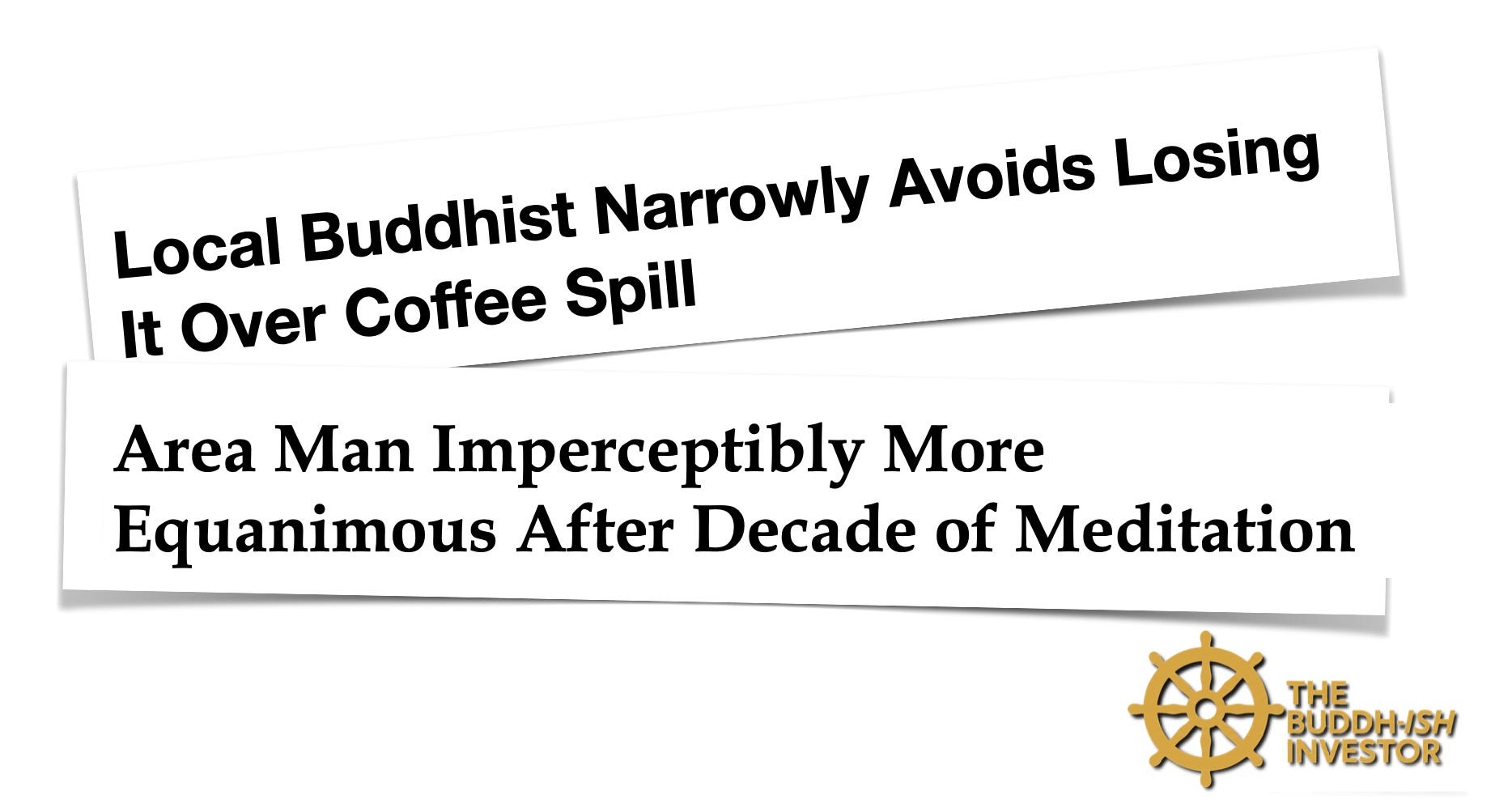
That’s not something you’d generally notice day to day. The rollercoaster still rolls, and most of the swings feel just as real as ever. But over years, that small shift might be doing more work than it appears.
The Long Game
In investing, compounding is easy to overlook. The gains seem insignificant, until one day you look back and realize how far you’ve come.
Maybe the Buddhist path works much the same way.
I’ve found it helps to notice those little gains, and appreciate them when they show up. Even if I lapse back into my old habits five minutes later.
That’s the practice. Noticing the small victories without getting too worked up about the setbacks.
Ten years of meditation, and I’ve finally learned to laugh at a spilled pot of coffee. Well, sort of.
Where will things be in ten more years?
- The Buddh-ish Investor
The Bottom Line
Emotional ups and downs are part of being human, even after years of meditation.
Equanimity isn’t about eliminating emotions, but being less pushed around by them.
Like investing, progress in meditation compounds slowly. Small shifts add up.
If You’re Looking For More
Behold! Einstein’s eighth wonder of the world: compounding. Want to see it in action? Have a little fun with this online interest calculator and see how even small amounts can grow over time.
I’ve been a little obsessed with Joseph Campbell’s work on mythology of late. This 6-part PBS documentary from 1988 is a great introduction: