

Is it worth all the effort?
All the hours and days and months spent sitting on a meditation cushion, and the years of faithfully putting money into investment accounts, often with barely perceptible change to show for it.
There’s the outside chance of reaching enlightenment, though I doubt that’ll happen to me in this lifetime. There are fleeting moments of serenity and insight along the way. Maybe there’s 1% less suffering. Maybe even just 0.001%.
It makes you wonder whether it matters at all if we manage to reduce our suffering by just a little, especially in the face of what can feel like an endless onslaught of it.
Because with Buddhism, just like investing, there are no assurances.
The Least Worst Option
You can imagine the investor who did everything “right,” scrimping and saving for decades, only to run into a major market crash right at the beginning of retirement. Or the meditator who spends ten years practicing, only to find themselves still reactive, still anxious, still caught in the same patterns.
Effort, in both cases, doesn’t guarantee outcome.
And sometimes, our efforts feel like they actually make things worse.
It’s hard not to experience pangs of fear and regret seeing your portfolio shrink in value on the market’s down days. Similarly, with living more mindfully, it’s hard not to feel shame or frustration when I’m constantly aware of how often I’m impatient, how quickly irritation arises, and how frequently I fall short of the person I imagine I should be.
Which makes the whole thing a harder sell. If the short term can feel more uncomfortable, and the long term offers no guarantees, it’s not obvious why any of this is worth pursuing in the first place.
There are alternatives, of course. Other ways of trying to make sense of suffering and uncertainty. Other ways of trying to build a life and prepare for the future. I’ve flirted with some of them. Catholicism. Materialism. Hedonism. Self-optimization. Chasing certainty about the markets and about life.
None of them have done much for me.
Buddhism and long-term passive investing, for all their flaws and uncertainties, still seem more sensible to me than the alternatives. They each seem like the least worst option.
The Wrong Question
With a not-so-glowing endorsement like that, the natural next question is: where do we find the faith to continue walking the Buddhist path and investing in the stock market?
When it comes to investing, people often point to history—the long arc of markets trending upward, the idea that someone who stayed invested over the past century, despite wars and recessions and all kinds of chaos, has generally done very well.
So maybe the “faith” there is really just a kind of trust in patterns and probabilities, in the idea that human beings will keep building and striving and improving their circumstances.
Buddhism has a long track record too, if you want to think of it that way. Millions of people over millennia have turned to it as a way of navigating suffering—not because it guarantees anything, but because it seems to help, at least a little, and often more than the alternatives they’ve tried. It offers the possibility of a life with less suffering here and now, not in some distant afterlife but in the middle of this one.
But both kinds of faith start to feel fragile when you look closely. There’s no guarantee the next hundred years of markets will look anything like the last—technological disruption, geopolitical conflict, deepening social divisions; it’s not hard to imagine the underlying engine of growth sputtering.
And the practice might simply not work for me. I could sit on a cushion for another ten years and find I’m no more at peace than I am today, just as my portfolio might not grow over the next twenty years despite doing everything I’m “supposed” to do.
So I keep circling the same question—is it worth it?—and keep coming up short. At best I’m making a shaky case for continuing. And maybe that’s because it’s the wrong question.
Because notice what “is it worth it?” assumes: that the point of sitting and saving is the payoff at the end. That I’m owed enlightenment, or a comfortable retirement, in exchange for the effort. Maybe the real question isn’t whether these pursuits will deliver—it’s whether I can keep showing up without demanding that they do.
No Expectations
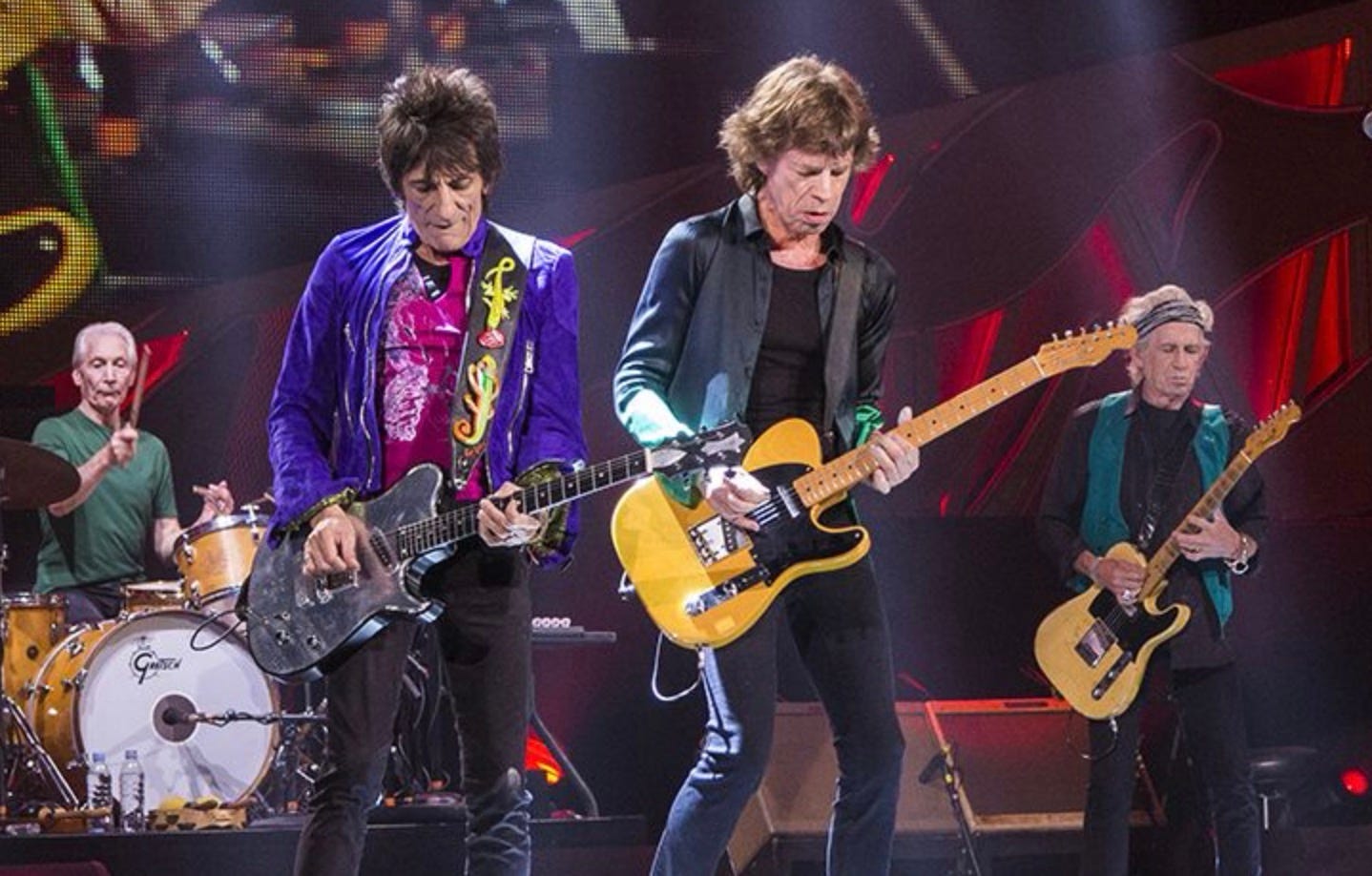
Lately, in my quieter moments, I find myself singing the refrain from the Rolling Stones’ tune No Expectations in my best Mick Jagger drawl: “I’ve got no expectations.”
I mean, I DO have expectations of Buddhism and investing. Like anything else in life—relationships, careers, Substacks—I have expectations attached to them. I want to get something out of them.
But the more I think about it, there’s a difference between wanting something and expecting something.
I can want enlightenment without expecting it. I can want my Substack to have 1,000 subscribers without expecting it. The moment we demand specific outcomes from anything in life, disappointment is probably inevitable. Things generally don’t turn out as we expect—sometimes for the better, sometimes for the worse.
Faith As An Action
So what’s faith without expectations?
Is it blind faith, like in a deity?
Or is it just the action of keeping going? Keep sitting on the cushion and putting hard-earned money into the market—without any expectations attached to it.
It’s like getting out of bed in the morning. Do you get out of bed with any particular expectations of the day? I don’t. I just do it. Robotically most days. I put two feet on the ground, put my housecoat on, trudge downstairs and make coffee.
I hope things will go well, but I’ve lived long enough to know that they might not. And yet I keep getting out of bed each morning.
Why can’t that be faith? Just showing up time and time again without any big expectations. Without over-thinking it.
There’s a Zen story that’s helpful here: the parable of the bowl. An eager student of Buddhism asked his teacher over lunch one day: “Teacher, how can I find enlightenment?” The teacher mulled the question for a second and replied, “Wash your bowl.”

Maybe that’s all we can really do. Just keep attending to what’s in front of us without demanding guarantees about where it all leads.
We keep washing the bowl. We keep getting out of bed. We keep investing. We keep walking the path.
- The Buddh-ish Investor
I’d love to hear from you! Email at Sangha@TheBuddhishInvestor.com or drop a comment below!
Listen to The Buddh-ish Investor Podcast on Apple Podcasts or Spotify
Follow me on Bluesky: @buddhishinvestor.bsky.social
Take home points
Effort doesn’t guarantee results. You can do everything right in investing or meditation and still come up empty.
Keep going without expecting a payoff. Faith here is the act of showing up and doing the work anyway.
Saw a person wearing a "Love is a Verb" t-shirt and thought that it kind of works for faith too:
_____ _____
/ \______/ \
/ \
/ / \ \
/___/ FAITH \___\
| IS |
| A |
| VERB |
| |
| |
| |
|________________|
Of course, "faith" isn't a verb, but, as I suggest in the post, I think it works better when we think of it as an action rather than something that you hold (or don't).