

I love my MacBook. I take it with me everywhere. I use it for work, for writing this Substack, for the podcast. I like the look of it—clean, polished lines. Very pleasing to the eye:
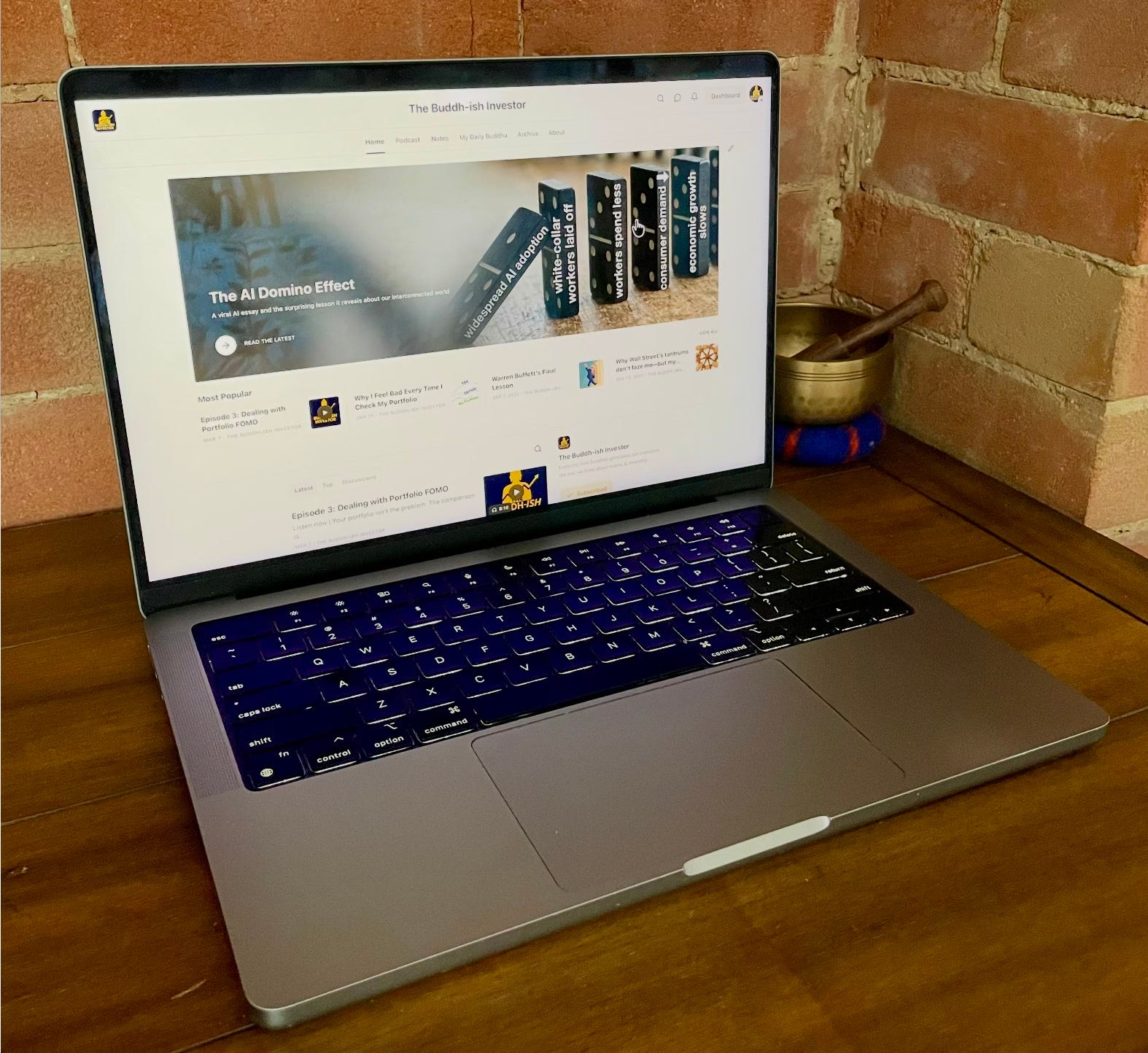
But have you ever seen the inside of one?
I was shocked the first time I opened an Apple laptop to change a battery. It wasn’t sleek at all. It was a dense, layered collection of chips, fans, and wires—nothing like the impeccably streamlined exterior I was used to.
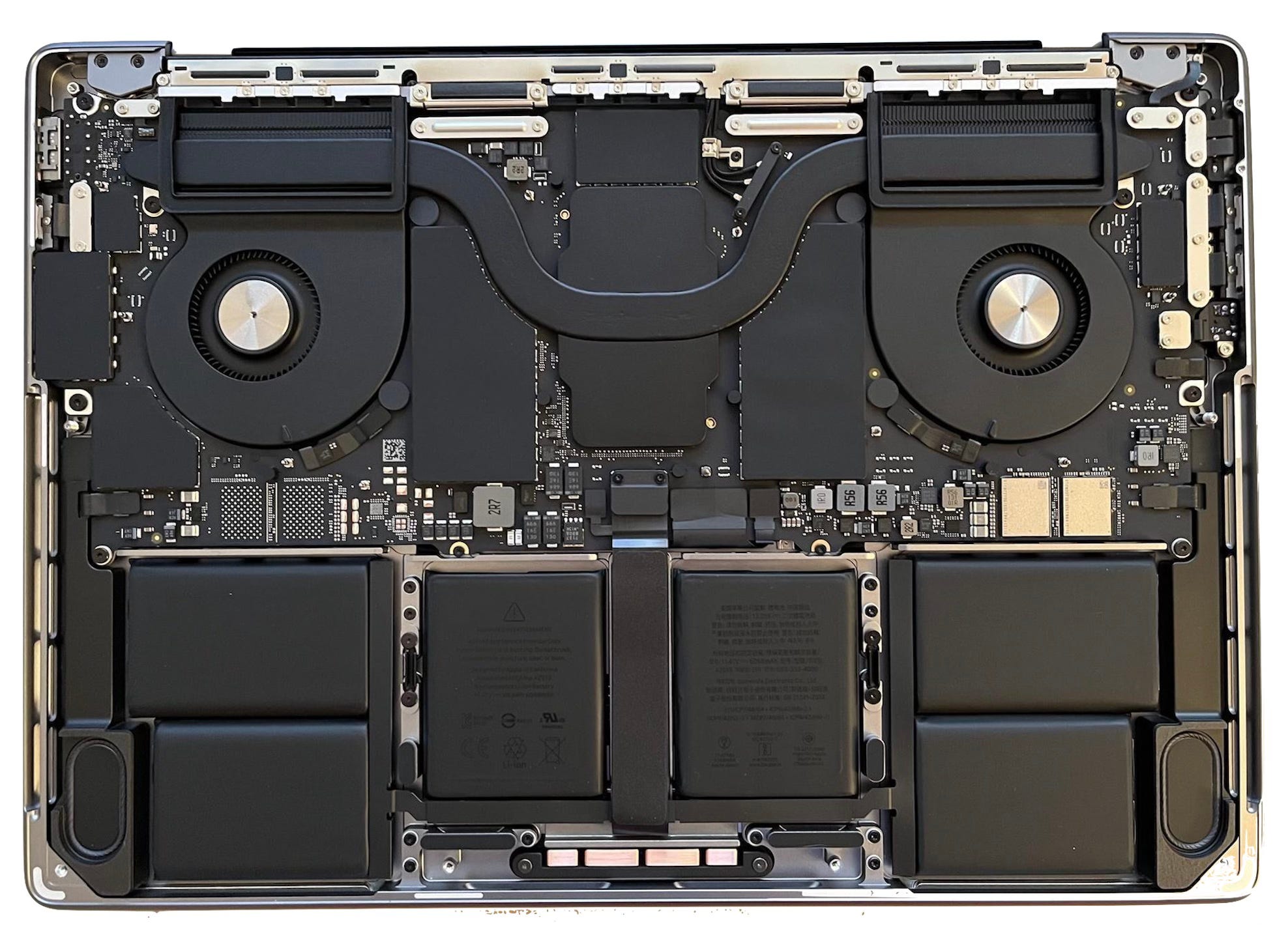
And yet, that apparent mess is exactly what makes the whole thing function so seamlessly.
What’s Underneath
I had the same reaction when I looked at the holdings of Vanguard Growth ETF Portfolio (VGRO)—an “all-in-one” fund that makes up 100% of my investment portfolio. On the surface, it’s just a snappy four-letter ticker: VGRO. Something I can buy and sell as easily as a stock.
But under the surface, it holds more than thousands upon thousands of stocks and bonds spread across the globe. [If you do want to peak under VGRO’s hood, check out the interactive spreadsheet below.]
Seeing under the hood of both my MacBook and VGRO was initially a bit jarring. But it also gave me a new appreciation for them. They take overwhelming complexity and wrap it up in something neat, usable, and—importantly—something that just works.
When the Bubble Pops
I’ve had the chance to look under the hood of other things in my life too like my relationships, my family, my own psychology. And the experience was familiar: a bit of shock, a bit of disorientation.
In each case, I had been operating under the quiet assumption that I knew what I was dealing with—that things were more or less dialled in, that they weren’t going to surprise me, that they were, in some way, as polished as my MacBook.
They weren’t.
Even a quick look under the hood—often prompted by conflict or stress—revealed just how complicated, and how far beyond my control, these things really are.
This is something Pema Chödrön writes about. She suggests that we tend to live inside protective bubbles. We tell ourselves stories about how things are: that they’re stable, predictable, and understandable. And then, at some point, the bubble pops.
Sometimes it’s dramatic—illness, loss, betrayal. Sometimes it’s quieter—just something that doesn’t fit the story we’ve been telling ourselves. Either way, what once felt solid suddenly isn’t.
Pema calls this contact with “groundlessness.” Not in a bleak or nihilistic sense, but simply as the recognition that things are more open, more fluid, and more complex than we’d like them to be.
That recognition is not a comfortable one. When the bubble pops, the instinct is to patch it up as quickly as possible—to restore the polished surface.
But Pema suggests something different: that we practice staying with that feeling, even just a little bit. Not all at once, but gradually.
A Different Way to Look
One way to do that, I think, is to pay attention to the small moments of surprise in your day:
The bus shows up early…
The coffee shop is out of your favourite pastry…
Your partner doesn’t make the bed…
These are tiny things, but in each case, reality doesn’t match the story you had in your head. A small bubble pops.
In those moments, instead of immediately smoothing things over, you can pause. Notice what that feels like—the brief disorientation, the subtle tightening—and remind yourself that this is actually what things are like: a bit unpredictable, a bit messy.
Life, like the inside of a MacBook or the guts of VGRO, is not simple. It just looks that way from the outside. Up close, it’s layered, interconnected, and not fully knowable. We get ourselves into trouble when we insist on the polished version, when we pretend things are simpler or more under our control than they really are. Because eventually, the hood opens anyways. The bubble pops.
So maybe the practice is this: be a little more curious. Look under the hood when you can. Not to figure everything out or tidy it up, but just to see what’s there. It might be messier than you expected. It might also be more interesting and beautiful than the shiny, polished version you were holding onto.
- The Buddh-ish Investor
I’d love to hear from you! Email at Sangha@TheBuddhishInvestor.com or drop a comment below!
Listen to The Buddh-ish Investor Podcast on Apple Podcasts or Spotify
Follow me on Bluesky: @buddhishinvestor.bsky.social
Take home points:
Simplicity is often a polished surface over deep complexity.
Whether it’s a MacBook, VGRO, or our own lives, what looks clean and controlled on the outside is actually layered, interconnected, and far more complex underneath.Get acquainted with “groundlessness” and messiness.
When reality disrupts our expectations, the instinct is to restore comfort—but the real practice is to pause, stay curious, and learn to sit with the uncertainty rather than smoothing it over.
If you’re looking for more:
A heartbreaker of a song from The Weather Station about life after the bubble pops—and leaning into the uncertainty:
“I felt just like a tourist, seeing it all for the first time. Like a guest. Unsure of what I might find.”And, for good measure, some tunes from another great Toronto artist—share widely please: