Lately, when I pick my 4-year-old son up from kindergarten, the first question he asks is:
“What’s special about today?”
Sometimes we do have special plans: meeting friends, going to the farmer’s market, or getting ice cream. But most days there’s nothing special going on. Just another Tuesday. When I tell him this, he’s clearly disappointed.
I try to make it easier on him. Just because nothing’s happening today doesn’t mean it’s not a special day, I tell him. Every day, every moment, is special.
He doesn’t buy it.
I can’t blame him. I’m 45, and I feel the same way.
I’m always looking for the next dopamine hit, like everybody else these days. I do this compulsively, chasing a small hit and an escape from whatever I’m actually feeling in the moment — frustration, fear, boredom. It’s my tried-and-true way of avoiding the present.
Tanha & portfolio tinkering
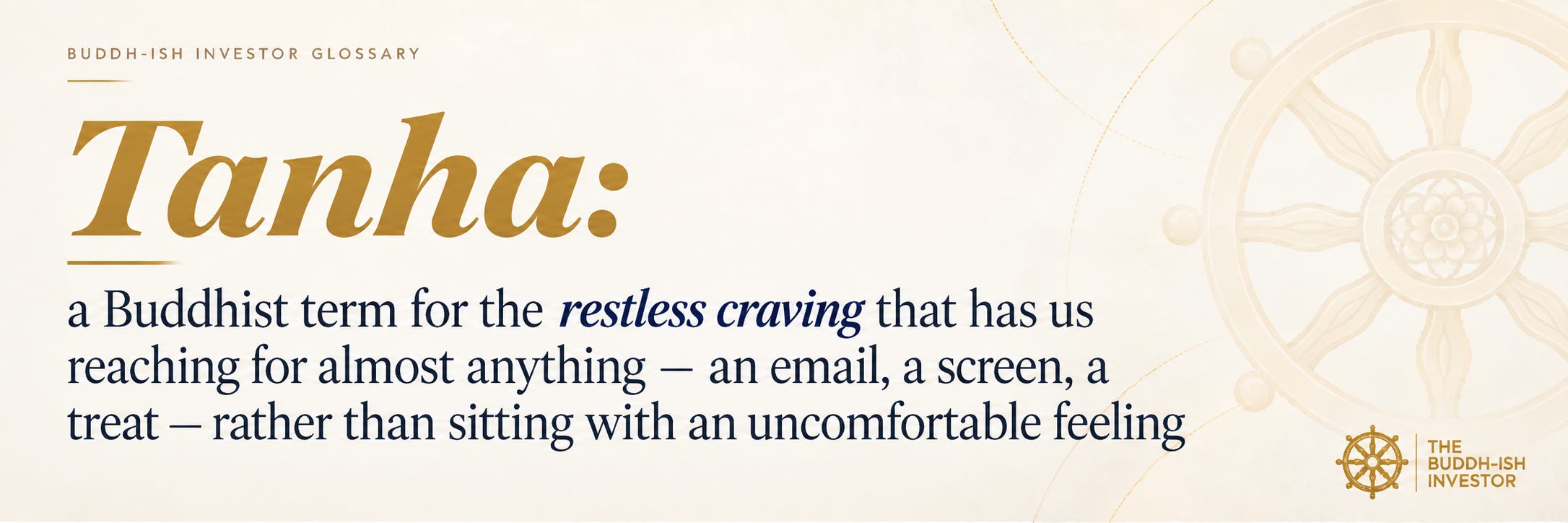
Buddhism has a word for this: tanha. It’s the restless craving that has us reaching for almost anything — an email, a screen, a treat — rather than staying with what’s actually here, however uncomfortable it may be.
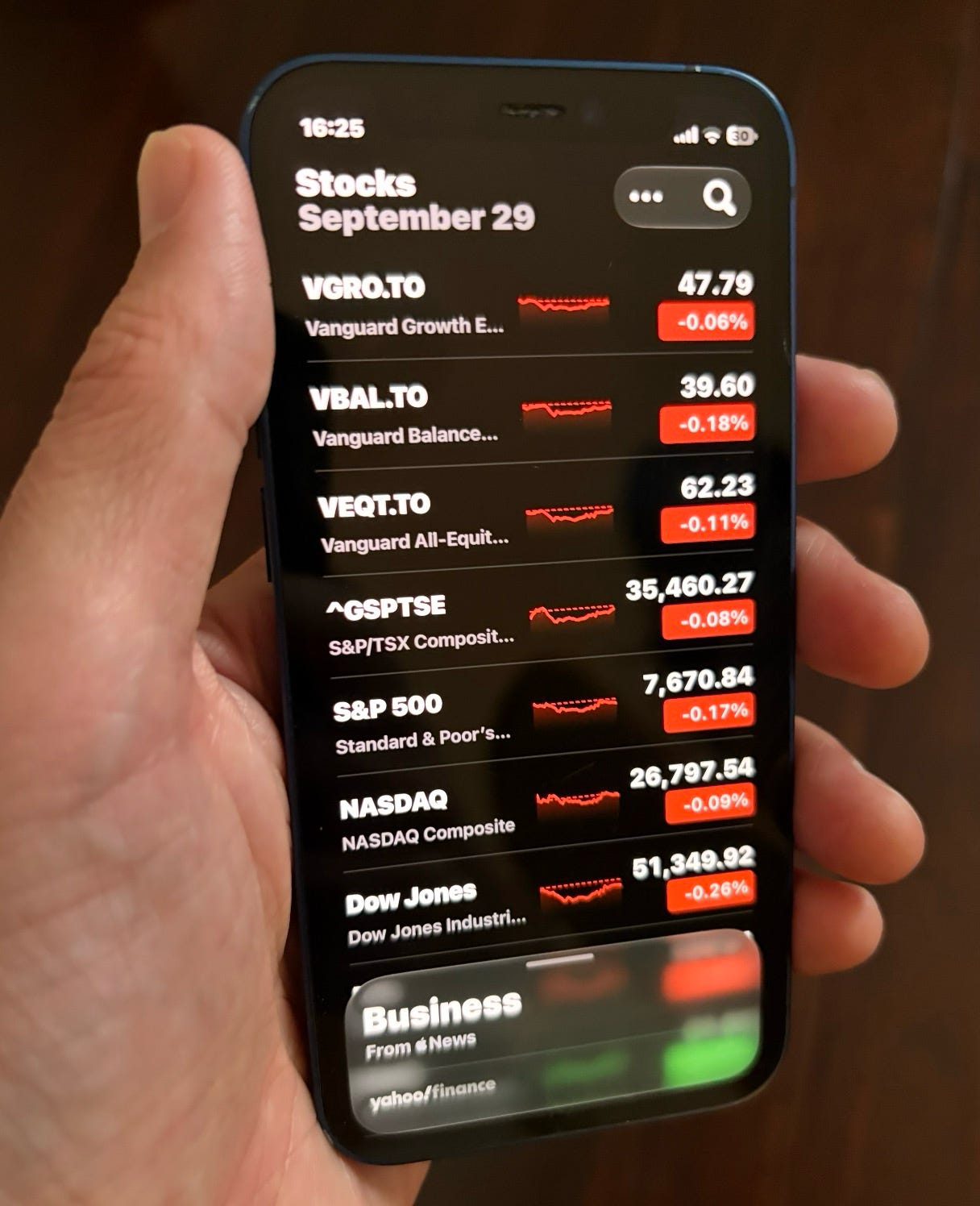
My tanha go-to is the Stocks app on my phone. I check it multiple times a day to see what the market is doing, even though, as a passive investor, I never do anything about it.
Distraction is the only goal here:
For other investors, tanha might drive them to constantly tinker with their portfolios or “play the slots” with options trading. Investing is a particularly good outlet for tanha because it’s easy to convince ourselves that we’re just being responsible—managing our finances, building our wealth, whatever you want to call it.
But a lot of the time, if we’re honest with ourselves, we’re checking our accounts out of boredom or restlessness, much like we scroll social media or browse online stores. And probably with much the same result—a temporary escape from whatever uncomfortable feeling is sitting there waiting for us when we stop.
Bingeing Paw Patrol
My son, at the age of 4, is starting to discover tanha. Rather than face the prospect of another evening at home with his 40-something parents, he’s imagining an evening of bingeing Paw Patrol, juice packs and Goldfish crackers. That’s what he’s hoping for. (And honestly, my version of a perfect evening looks about the same. But instead of Paw Patrol, it’s 1970s auteur cinema for me.)
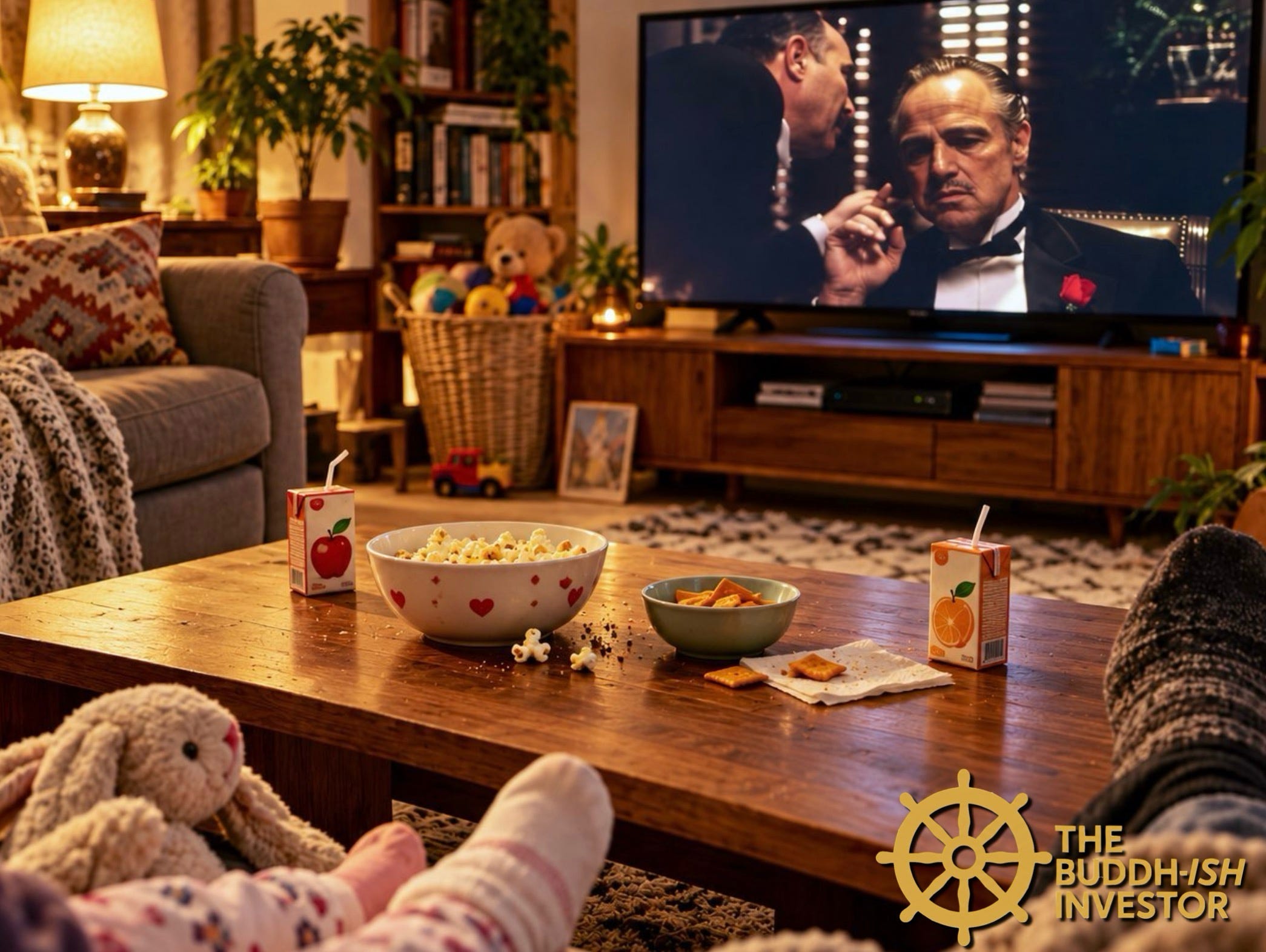
He’s disappointed when I tell him that’s not what tonight holds. I’ve struggled to find a way to convince him that we don’t always need something to look forward to — that life is mostly lived moment to moment, and a lot of those moments aren’t particularly pleasant to sit in.
The truth is, I can’t really put this into words for him. Fundamentally, we experience the world in different ways. He, as a kindergartener, experiences what’s right in front of him. I, as a middle-aged man, experience the reality I’ve constructed in my head. He’s all touch and smell and taste, while I’m all to-do lists, Substacks and worries.
Back to the Future Present
But we’re converging. My son is learning to live more in his head, while I’m trying to get out of mine:
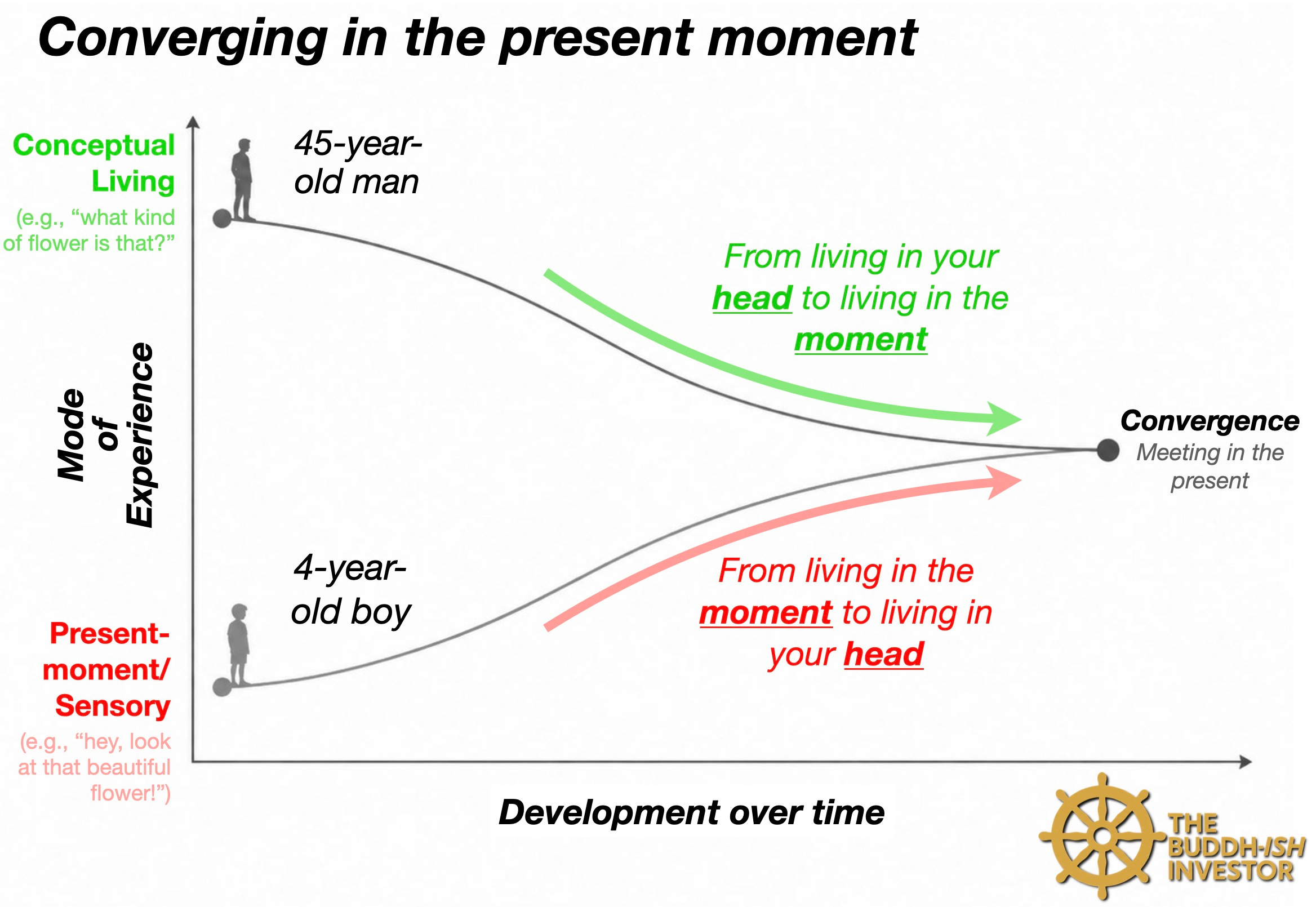
My son, it turns out, is developing what psychologists call episodic foresight: the ability to imagine or conceptualize a future moment instead of simply reacting to what’s in front of him.
Meanwhile, through my mindfulness practice, I’m trying to experience life more like my son does: directly, with a little less narration running in the background.
This is not easy work for me. I’m trying to undo decades of being stuck in my head. Sometimes, when I catch myself reaching for my phone, I’ll stop and do a quick body scan, or just feel my feet on the ground. It helps a little.
Meanwhile, my son slips effortlessly back into the present moment.
Mere seconds after we have our little conversation about what’s special, he’s off smelling a flower, running around in the sun, pointing out something he’s never seen before.
He’s already forgotten the question. It’s really something to see.
I’ll take his example the next time I’m asking myself ‘What’s special about today?’ and feeling tempted to swap index funds to save an extra 0.01% on MER. That’s just tanha doing its thing.
Though, for the record, no amount of tanha could make me sit through an episode of Paw Patrol.
The Bottom Line
Tanha shows up in ordinary life as restless reaching: checking markets, scrolling, tinkering and looking for the next thing rather than staying with what’s here.
As my son learns to imagine the future, I’m practicing the opposite: getting out of my head and back into the present moment.
If You’re Looking For More
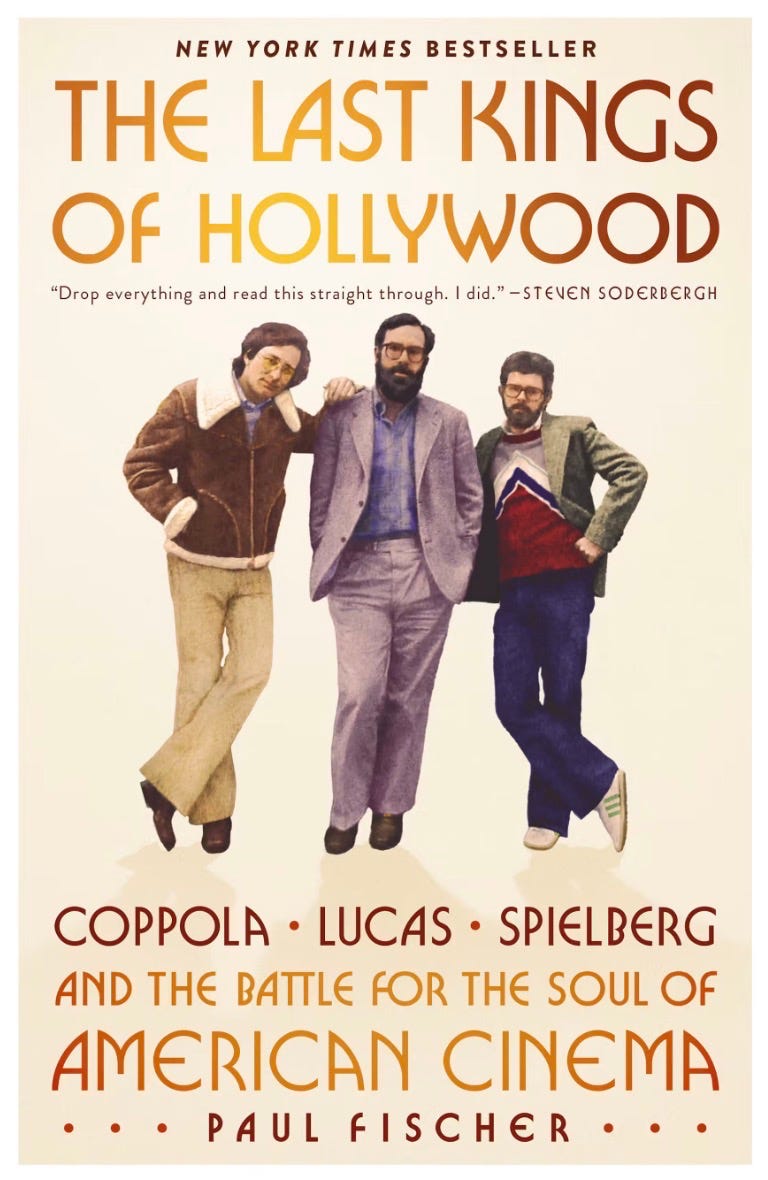
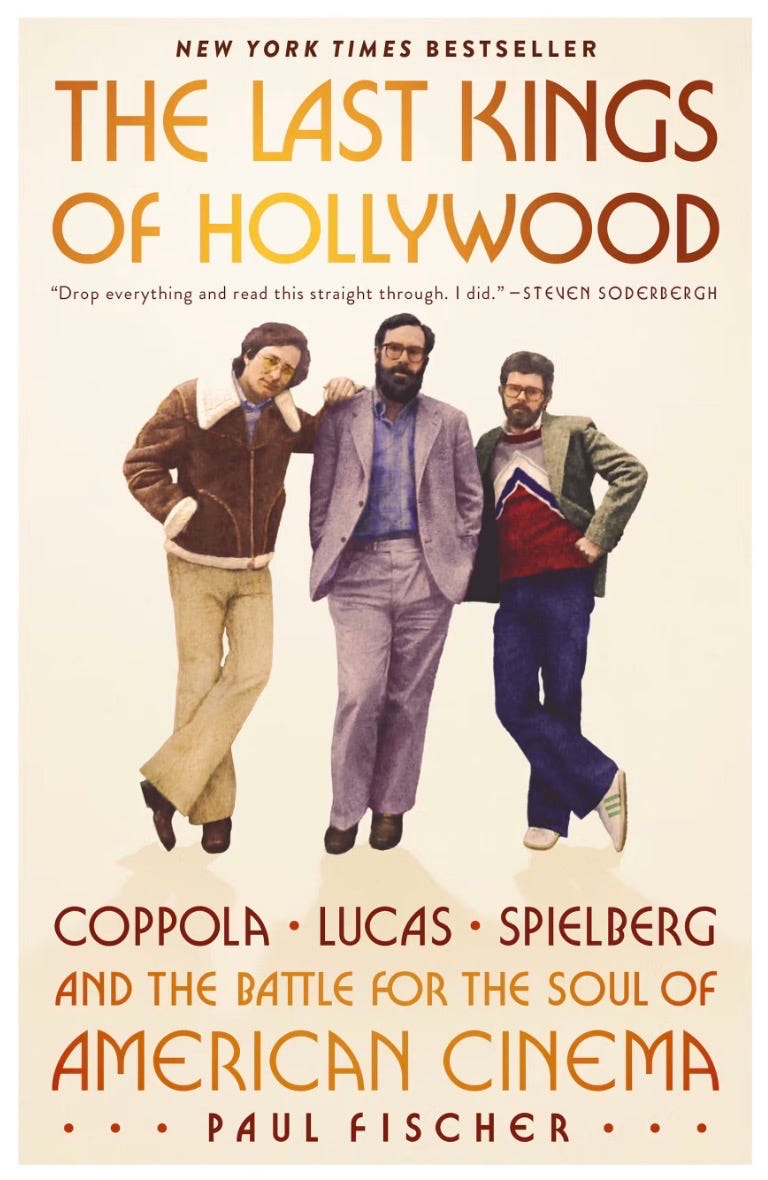
The Last Kings of Hollywood: A fascinating look at 1970s cinema, packed with fun facts and behind-the-scenes stories. Like, did you know that George Lucas was abdolutely miserable during the shooting of Star Wars: A New Hope? And Francis Ford Coppola strong-armed Lucas out of directing Apocalypse Now? I could go on!
And if you want to do a deep dive on episodic foresight, this article is a good place to start: