

“Seeds.”
“What seeds am I sowing?”
That’s my refrain these days.
My 3-year-old refuses to put on his snowsuit. “Seeds.”
My call gets dropped after an hour waiting to talk to an airline rep. “Seeds.”
Someone cuts me off in traffic. “Seeds.”
Seeds.
What do I mean by this?
The idea comes from Pema Chödrön, the Buddhist teacher whose work I’ve been sitting with recently. She writes about how we are constantly planting seeds of karma in our lives. Not karma as a cosmic system of rewards and punishments, but something far simpler and more immediate: cause and effect.
The seeds we plant—with our thoughts, words and actions—change ourselves and the world around us.
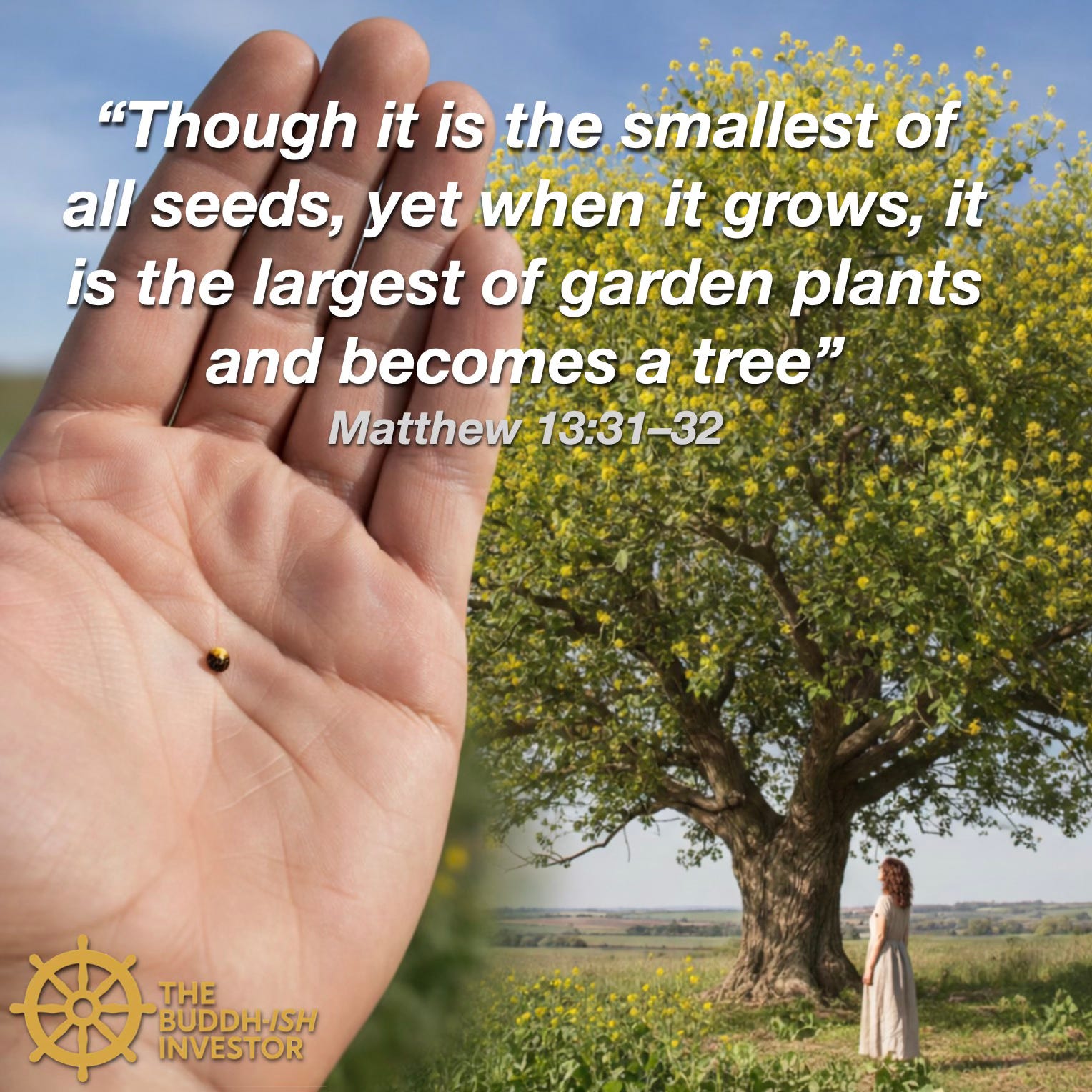
Some seeds are skilful. Others are not. Some grow into patience, steadiness, and generosity. Others grow into irritation, anxiety, and hate. And while we can’t control every circumstance in which we live, we do have some say in the seeds that we plant.
When I whisper “Seeds” to myself, I’m trying to remember that this moment matters more than it appears to.
Financial Seeds
This plays out in our investing lives in ways we rarely stop to notice.
Think about the small, habitual things: compulsively checking the markets during a quiet moment, scrolling Yahoo Finance before bed, half-listening to a financial podcast while you make dinner. These feel like nothing — just background noise. But they’re seeds too.
Here’s how it can unfold.
You check the markets out of habit and see that Microsoft (MSFT) is having yet another down day — down more than 20% over the past few months. The chart looks ugly:
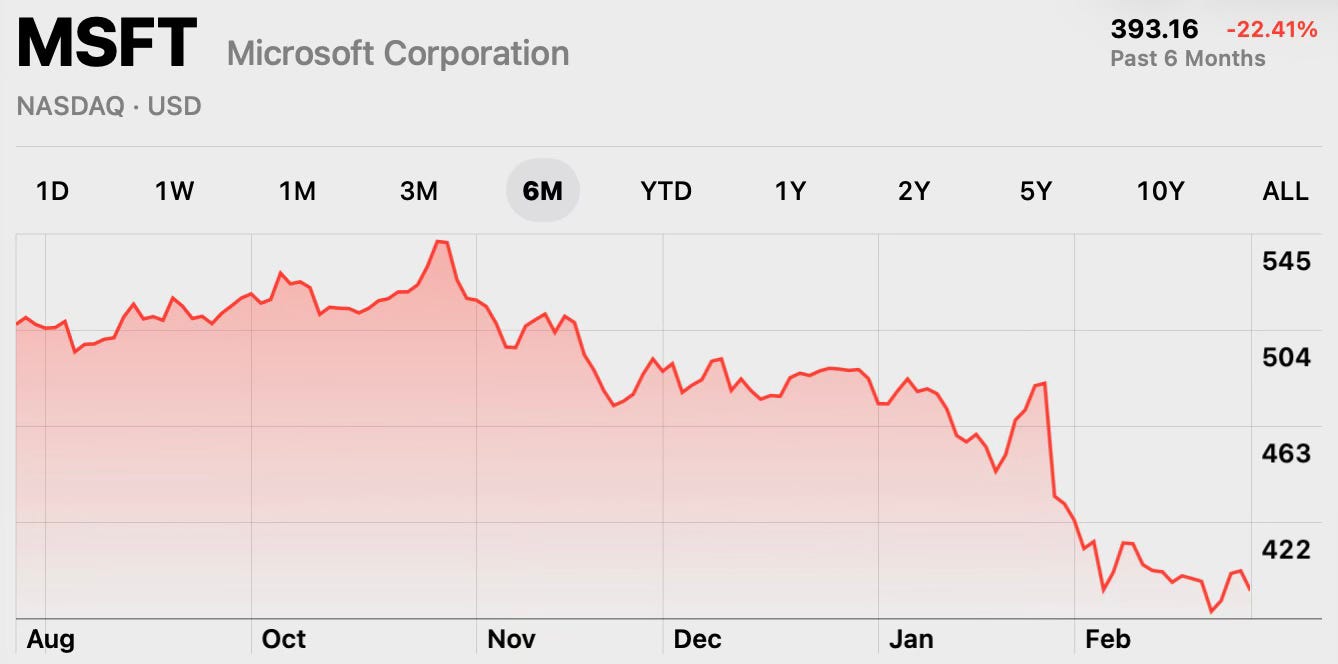
A thought arises: Surely Microsoft’s going to bounce back to new all-time highs. I should buy it now while it’s cheap.
You convince yourself this is too good an opportunity to pass up. So you buy some MSFT shares.
There’s a flicker of doubt — after all, you already have a globally diversified portfolio suited to your risk tolerance and goals — but you reassure yourself. It’s okay to have a bit of fun sometimes.
Time passes. Microsoft comes roaring back. You feel vindicated. Maybe even a little brilliant.
So you buy another “fallen” stock. And then another.
Before long, these single-stock positions start piling up in your portfolio. You’re still mostly diversified. But now a non-trivial portion — maybe 5 or 10% — is made up of individual, perhaps volatile, names.
You start watching those companies more closely. You check the markets more often. BNN hums in the background while you make dinner. You’re hitting up ChatGPT for hot stock tips during your son’s swimming lessons.
And so one seemingly innocent glance at an app — one seed — grows into something much larger than you intended. And keeps growing…
Maybe you lose sleep. Maybe your family senses the shift in your mood. Maybe financial decision-making becomes charged rather than calm. Maybe your kids pick up on your financial anxiety and this shapes their relationship with money.
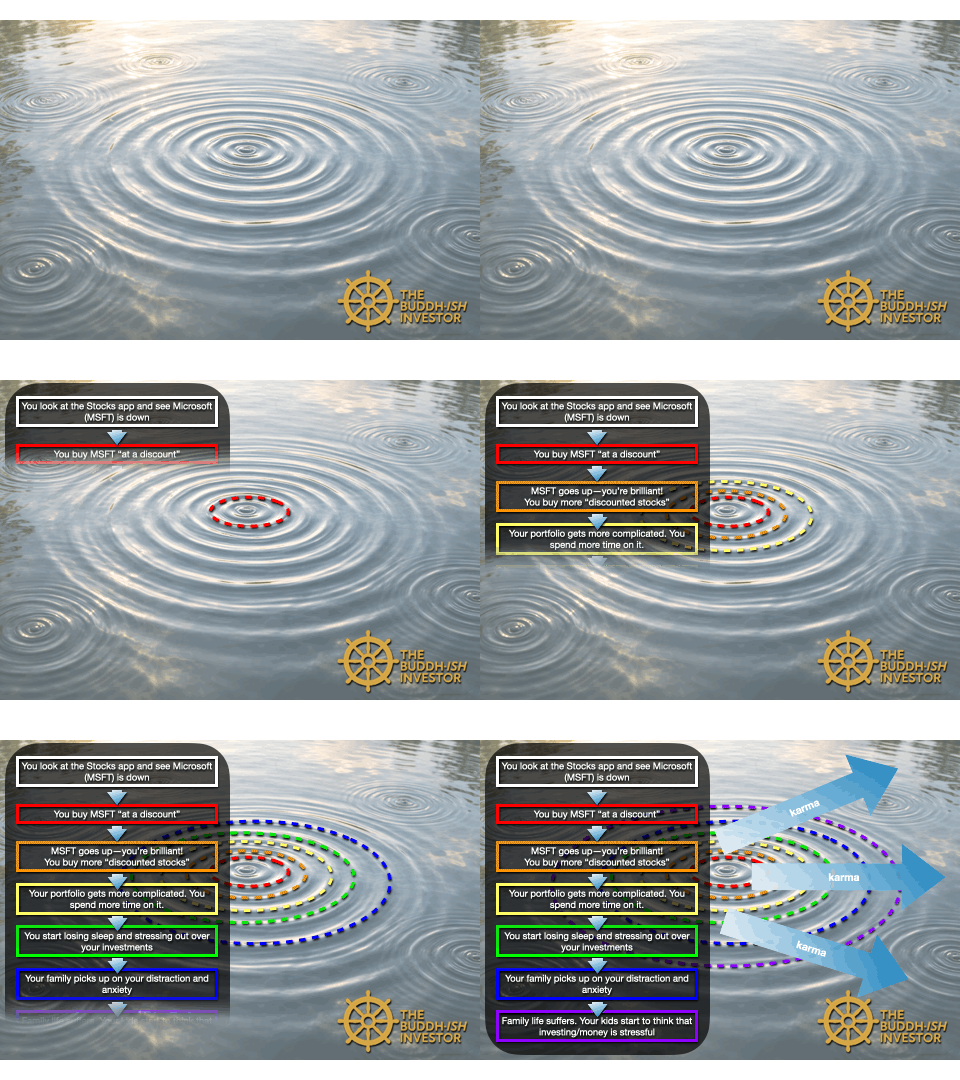
We could keep tracing the ripple effects outward. That’s precisely the point.
Nothing is isolated. Everything is inter-connected. What we do, think and say has far-reaching effects on the world around us.
One Calm Person on the Boat
Thích Nhất Hạnh tells a story that vividly illustrates this.
After the fall of Saigon, nearly a million Vietnamese people fled the country in overcrowded, barely seaworthy vessels. Many were lost to storms, starvation, or pirates.
As he tells it:
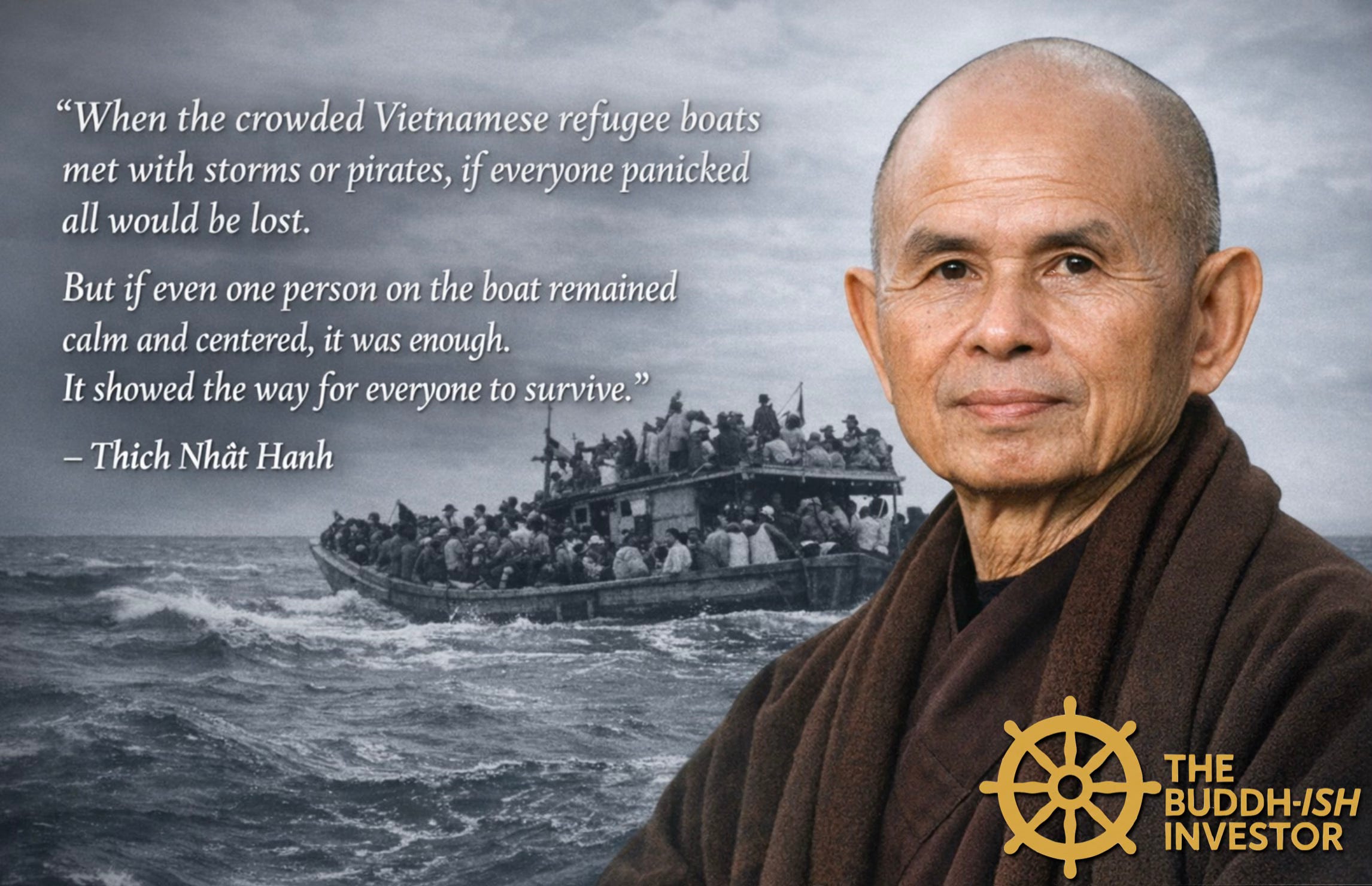
“When the crowded Vietnamese refugee boats met with storms or pirates, if everyone panicked all would be lost. But if even one person on the boat remained calm and centered, it was enough. It showed the way for everyone to survive.”
- Thích Nhất Hạnh
One person planting a seed of calm could alter the fate of many.
Of course, the opposite is also true. Panic spreads just as quickly. So does anger. So does fear.
We see this every day. A bad mood enters a room and, within minutes, it belongs to everyone.
Seeds Change Us Too
The seeds we plant don’t just impact the world around us. They change us too.
What we think, do, and say is not neutral. It reshapes the brain over time. Tendencies get reinforced. Neural grooves deepen. What begins as a reaction slowly becomes a habit, and what becomes a habit starts to feel like who we are.
If I snap at my son, that reaction doesn’t simply evaporate once the words leave my mouth. It strengthens impatience. It makes the next snap a little easier, a little more automatic.
The same dynamic plays out in traffic. In marriages. In markets.
Planting Better Seeds
So how do we plant better seeds?
Mindfulness is often sold as a personal wellness practice — something you do on a cushion for twenty minutes to feel better about your day. But I think it’s more practical than that. Awareness of our habitual thoughts and reactions is the first step toward changing them. And changing them — planting more skilful seeds, even in small moments — has effects that extend far beyond us.
In our financial lives, this might mean noticing the impulse to check the markets and pausing before you do. Asking yourself: Why am I doing this, and what am I likely to do with what I find?
These feel like small things.
But so does a seed.
So the next time your child refuses to put on a snowsuit, or the market flashes red before breakfast, you might pause and ask:
What seed am I about to plant?
- The Buddh-ish Investor
I’d love to hear from you! Email at Sangha@TheBuddhishInvestor.com or drop a comment below!
Listen to The Buddh-ish Investor Podcast on Apple Podcasts or Spotify
Follow me on Bluesky: @buddhishinvestor.bsky.social
Take home points:
Seeds get bigger. Tiny reactions — checking markets, chasing a stock, snapping in traffic — are “seeds” that quietly grow into larger patterns in our portfolios, moods, and relationships.
Awareness changes the seeds we plant. A brief pause before reacting can shift us toward calmer, wiser choices — and those small choices ripple outward.
If you’re looking for more:
Harry Chapin’s cautionary tale on the ripple effect of seemingly inconsequential decisions:
More Buddh-ish thoughts on habitual reactivity:
"I'm just gonna sit here."

One of my favourite songs is Blood Embrace by Bonnie ‘Prince’ Billy and Matt Sweeney. It’s from their 2005 album Superwolf.