

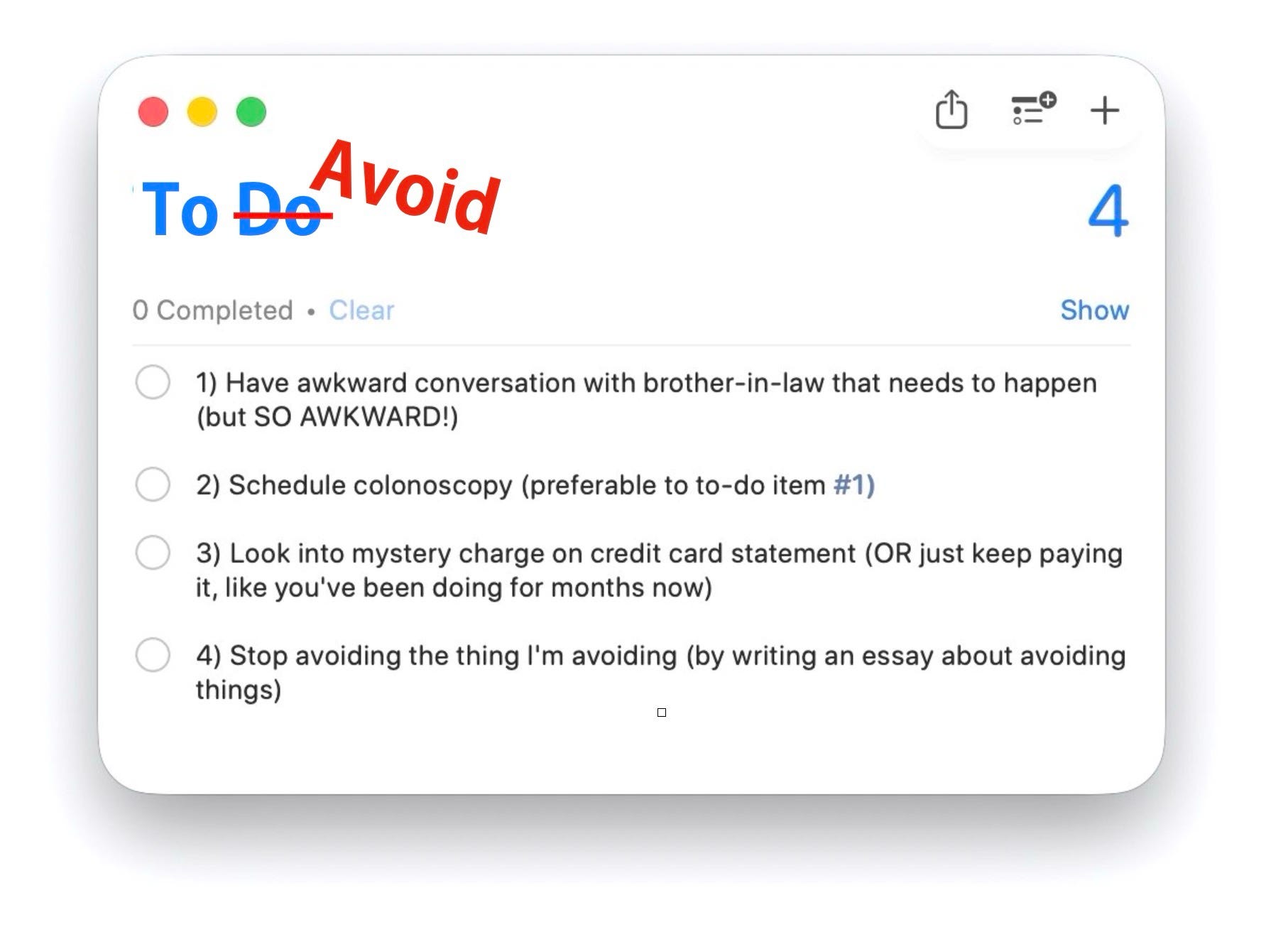
I can usually tell what I’m avoiding by looking at my to-do list.
At some point, my “To Do” list became a “To Avoid” list.
It’s chock-full of dreary, complicated, or awkward tasks that I never seem to get around to. They sit there for weeks, months, sometimes years, taunting me every time I open the app.
Each unfinished task gnaws at me a little.
So my “To Do” list has become yet another thing I avoid along with the many avoidable tasks that populate it: Tedious, thankless chores. Emails I can’t bear to respond to. Decisions that I’d rather not make.
When something feels unpleasant, I have an impressive ability to find something else to do instead.
The Trouble With Avoidance
The strange thing is that avoidance never seems to work. The small discomfort I’m unwilling to face today somehow becomes a much bigger source of suffering tomorrow.
What could have been a brief moment of discomfort becomes a prolonged period of low-grade misery. The email I don’t send sits in the back of my mind for days. The conversation I postpone creates tension that lingers for weeks. The task I could have completed in twenty minutes becomes a cloud hanging over me for a month.
I pay the price every time.
I’m getting better at recognizing this pattern. More and more, I’ve come to see that putting things off rarely spares me from suffering. Usually it just spreads the suffering out over a longer period of time.
And I don’t think I’m alone.
Human beings spend an extraordinary amount of energy trying to avoid discomfort. We run toward pleasure and away from pain. We distract ourselves. We bury ourselves in work, entertainment, food, booze, shopping, social media—whatever helps us avoid the feeling we’d rather not experience.
But avoidance doesn’t change reality. The uncomfortable thing is still there.
The Pain of Getting Back In (After Bailing Out)
Investing offers a good example.
When markets crash, our first impulse is often to escape. We want relief from the fear. We want the discomfort to stop. So we sell.
The fear may disappear for a while, but a new problem immediately takes its place: Now we have to decide when to get back in.
I’ve heard stories of investors who sold during the Great Financial Crisis and never returned to the market. They avoided the pain of the downturn, but spent years wrestling with uncertainty and second-guessing as they tried to find a way back into the market:
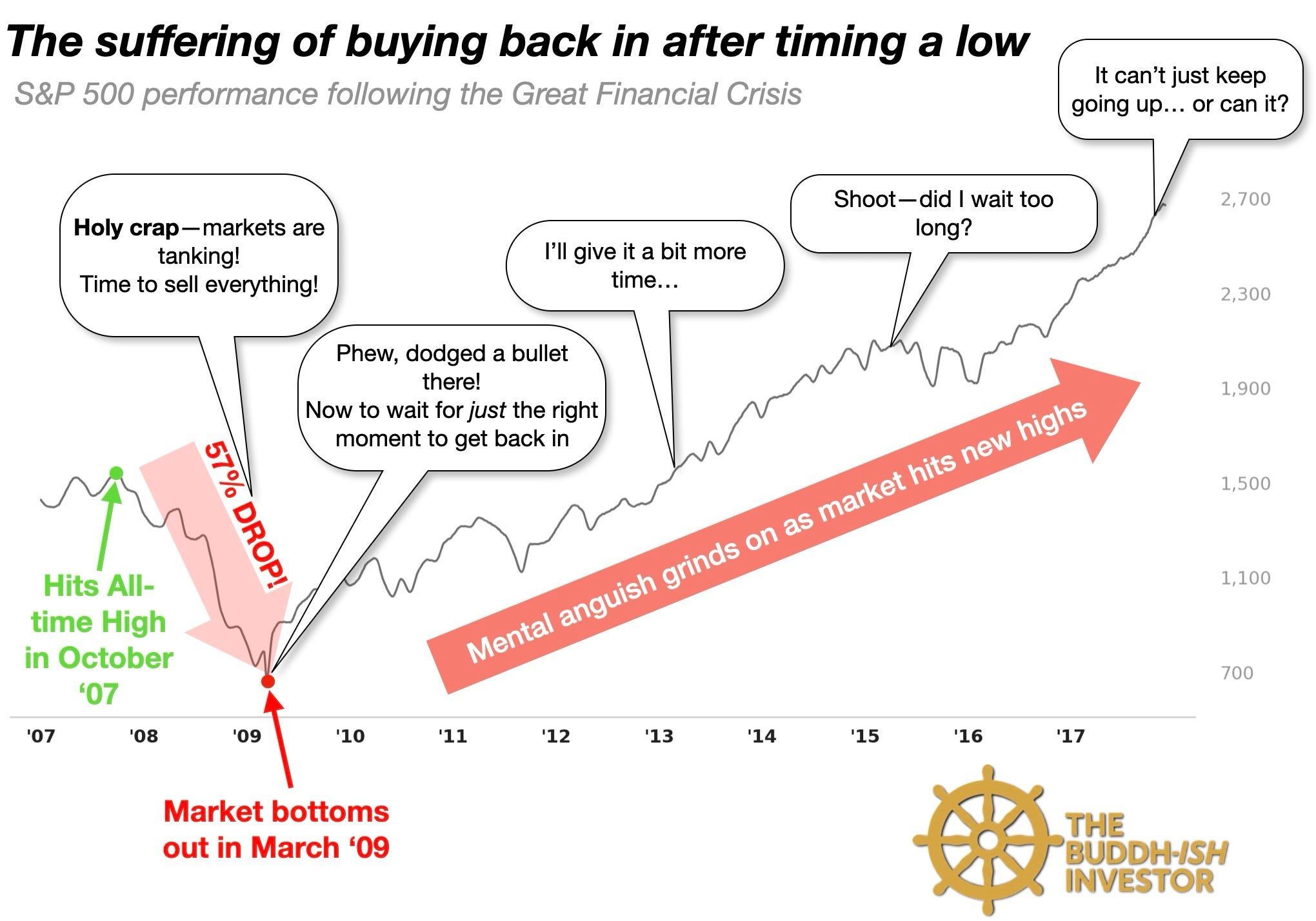
Had they simply stayed invested and endured the discomfort, they likely would have achieved better results—and spared themselves years of mental turmoil.
Life works much the same way.
The Buddha’s first teaching wasn’t that life should be free of suffering. It was that suffering is part of life.
No one would deny that life has its share of suffering.
And yet, we spend so much time hiding from it.
Turning Toward Discomfort
But when we stop running and turn toward discomfort instead, we discover that we can handle more than we thought.
The knot in the stomach. The tension in the neck. Or, my particular favorite, tightness in the jaw. These sensations are uncomfortable, but they are survivable.
Each time we face them directly, we become a little less afraid of them.
This isn’t easy work. It’s a lifelong project. Fortunately, life gives us endless opportunities to practice.
For me, the cue is avoidance itself.
In this sense, my “To-Do Avoid” list is actually a much more useful tool than I give it credit for. Every unfinished task on the list is trying to tell me something—not that I’m ineffective or lazy, but that I need to get curious.
Instead of asking “Why haven't I done this yet?” maybe I should start asking "Why am I running from this? What discomfort am I unwilling to feel right now?”
So maybe my “To Do” list is less of a “To Avoid” list and more of a “To Get Curious About” list.
- The Buddh-ish Investor
The Bottom Line
Avoiding discomfort rarely eliminates suffering; it usually prolongs it.
Whether with tasks or investing, the urge to avoid something can be a cue to turn toward discomfort instead.
If You’re Looking For More
More on sitting with challenging emotions:
Oliver Burkeman’s got a lot to say about “to-do” lists. Start here and then check out his incredible book Four Thousand Weeks
